
Sofa buying guides
Pet-Friendly Sofa Fabrics: What Works With Dogs, Cats and Kids
By Sofa Studio Design Team · · 8 min read
A pet-friendly sofa isn't about finding one magic fabric. It comes down to a handful of choices you make when you order: how tightly the fabric is woven, how heavy it is, what colour it is and how the cushions are built. Get those right and a sofa can live happily with a shedding retriever, a cat that kneads before every nap, or a toddler with a juice box.
This guide takes each choice in turn, with a table comparing the main fabric families for dogs, cats and kids. It is written from the workshop side: Sofa Studio builds custom sofas by hand in Brampton, Ontario, and picking a fabric for a home with animals is one of the most practical decisions in the whole order.
The short answer: weave first, then colour
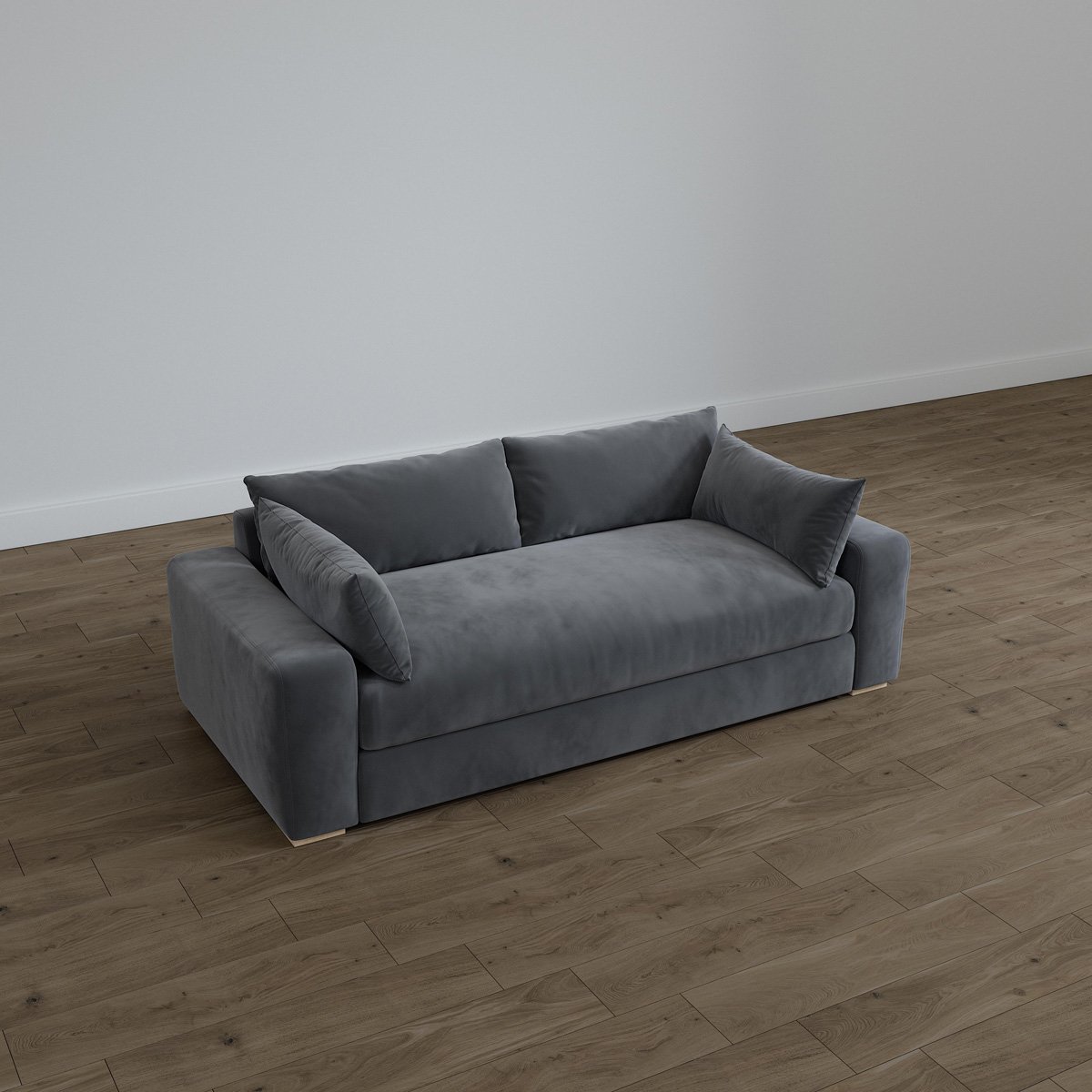
The most pet-friendly sofa fabrics are tightly woven, heavier-weight materials with a smooth or short-pile surface, such as a dense velvet, a tight cotton-linen or microfibre leather. Pair that fabric with a mid-tone colour close to your pet's coat and a simple cushion style, and you get a sofa that hides hair, resists most claws and cleans up without drama.
Approach these with care: loose or loopy weaves that claws can hook, very light colours in a house with a dark-coated dog, and delicate hand-dyed linens if you expect to spot-clean often. None of these is wrong in every home, but each asks more of you.
One honest note: no upholstery fabric is claw-proof, and a determined cat can mark almost anything. The goal is a sofa that stands up to everyday wear and recovers well.
Five things that make a pet-friendly sofa fabric
1. A tight weave
Weave matters more than fibre. When threads are packed closely, a claw slides across the surface instead of slipping between the yarns and pulling them. Hold a swatch up to a window: if you can see light through the gaps, a cat can probably hook it.
2. A heavier weight
Heavier fabrics have more yarn in every square inch, so they cope better with scratching, digging and the daily slide of a dog jumping on and off. Sofa Studio's own guidance for pet owners is short and sensible: choose heavier weights and tighter weaves.
3. A surface with nothing to catch
Flat weaves and short, dense pile give claws nothing to grab. Velvet is the classic example. Loops, slubs and open textures are the opposite. Bouclé, with its curly looped yarn, is beautiful but is usually the riskiest choice for a cat that scratches.
4. Hair that lets go
Some fabrics grip fur and others release it. Smooth surfaces such as velvet, microfibre leather and leather let hair lift off with a lint roller or a slightly damp rubber glove. Textured weaves tend to hold onto it, which is fine if you vacuum often and frustrating if you don't.
5. Predictable cleaning
Pets bring mud, drool and the occasional accident. Spot-cleanable fabrics suit households that expect spills, and a colourfast fabric is more forgiving when you do need to treat a mark. Sofa Studio doesn't add chemical coatings such as stain repellents to its fabrics, so the fabric's construction and your habits do the work.
Sofa fabrics compared for dogs, cats and kids
Every fabric varies with weight and weave, so treat this as a general guide and judge the actual swatch.
| Fabric | Dogs | Cats | Kids | Watch out for |
|---|---|---|---|---|
| Velvet (tight, short pile) | Good: hair sits on top and lifts off easily | Good: no loops for claws to hook | Good: soft and warm, hides small marks in mid-tones | Paw prints and pressure marks until you brush the pile |
| Bouclé | Fair: disguises some fur, but hair tangles in the loops | Risky: loops can be pulled by claws | Fair: inviting, but sticky fingers work into the texture | Snags; never yank a pulled loop |
| Thread-dyed cotton linen | Good in heavier weights: colourfast and relatively easy to care for | Fair to good if the weave is tight | Good: forgiving with spills when cleaned to the care label | Check how tight the weave is on the swatch |
| Hand-dyed linen (light or medium weight, washed cotton linen) | Fair: breathable and relaxed, but marks show | Fair: lighter weights are more vulnerable | Fair: spot-cleaning can fade or discolour it | Better for calmer homes |
| Microfibre leather | Good: hair and dirt wipe away | Fair: smooth, but claws can scratch or puncture it | Good: wipe-clean for spills | Visible scratches from claws |
| Leather, including nubuck | Good for hair; claws leave marks | Risky with scratchers | Good on finished leather; brushed nubuck marks more easily | Natural variation and visible wear |
Sofa Studio's Meridian Leather, for example, is a full-grain nubuck with a soft, brushed surface and natural colour variation, and a brushed surface shows paw marks more readily than a finished leather. For the wider trade-offs, read leather vs fabric sofas, or compare the softer fabrics on feel and looks in our velvet vs bouclé vs linen guide.
Pick a colour that works with your pet's coat
Colour won't prevent damage, but it decides how much of daily life you see. A few rules of thumb:
- Match the coat, roughly. A golden dog on a warm oatmeal or caramel sofa leaves hair you barely notice. The same dog on charcoal velvet is visible from across the room.
- Mid-tones are the safe bet. Very light colours show muddy paws, and very dark colours show pale fur and dust. Greys, taupes, olives and warm browns sit in the forgiving middle.
- A little colour variation helps. A fabric with some depth, like a thread-dyed cotton linen, disguises hair and small marks better than a perfectly flat, solid colour.
- Mind the sunny window. Pets love a sunbeam, and so does fading. Dark, saturated colours fade faster, so where you can, position the sofa away from direct sunlight and radiators.
Homes with a black cat and a white dog have it hardest. There, a mid-grey or a fabric with a heathered look is usually the compromise that hides both. For the design side of the decision, see our guide to choosing a sofa colour.
Cushion style, depth and shape matter too
Bench seats leave fewer crevices
A single long seat cushion leaves no gaps for crumbs, toys and fur to collect, and it is quick to vacuum. The Amiri Borderless Bench Seat Cushion Sofa is a good example of this clean-lined approach.
Slipcovers come off
A slipcover sofa lets you take the cover off for cleaning, following its care label, which is a real advantage with a dog that rolls in things. The Aria Slipcover Sofa and the York High Back Slipcover Sofa are Sofa Studio's slipcover designs. If you wash a slipcover, keep the water cold; a little colour loss the first time is normal.
Loose fill needs more fluffing
Pets that circle and nest flatten loose-fill cushions faster in their favourite spot. Fluff and rotate those cushions regularly so they wear evenly. If you would rather skip that chore, a tailored cushion with a Medium or Hard firmness shows fewer dents between tidy-ups.
Room for everyone
If the dog sits with you, it takes up a seat. Sofa Studio's custom options let you set the width (the Amiri, for example, runs from 60" (152 cm) to 160" (406 cm) in 10-inch steps) and the overall depth, from Standard 36" (91 cm) up to Extra-Deep 46" (117 cm). An extra 10 inches can be the difference between sharing comfortably and perching on the edge. A dual-chaise sectional such as the Amiri Both Side Chaise in black microfibre leather gives a big dog its own lounging spot with a wipe-clean surface.
A simple routine for a sofa you share with pets
- Vacuum weekly with an upholstery brush, including under the cushions where fur collects.
- De-fur between vacuums with a lint roller or a slightly damp rubber glove swept in one direction.
- Cover the favourite spot with a washable throw. It takes the brunt of the hair and is far easier to wash than the sofa.
- Keep claws trimmed and give cats a sturdy scratching post near the sofa, so the upholstery isn't the most tempting thing in the room.
- Deal with accidents quickly. Blot liquids with a clean, dry cloth, don't rub, and lift solids with a spoon. Then follow the fabric's care label, and test any cleaner in a hidden spot first.
For stain-by-stain steps, including steaming cushion covers, see how to clean a fabric sofa.
Next step: let your pet test the swatches
The best way to judge a fabric for your home is to try it there. Sofa Studio sends up to five fabric swatches, chosen from more than 100 materials, and you get the swatch cost back once your sofa order is complete. If you are in a hurry, the sofa can be ordered first, with the fabric picked after the samples arrive.
When they land, run a quick test. Drag a fingernail lightly across each one, press some of your pet's shed hair onto it and see how easily a lint roller lifts it off, then leave the swatches where your pet naps for a few days. Hold the survivors against your floor and walls before you decide. You can order swatches here, and if you want a second opinion on the shortlist, a free 30-minute virtual design consult is a good place to talk it through.
Frequently asked questions
Is velvet a good sofa fabric if I have a cat?
Velvet is often a good choice for cats, because its short, dense pile has no loops for claws to hook. It will show pressure marks and the odd scratch line, but brushing the pile usually evens these out. Choose a tight, heavier velvet in a mid-tone colour.
Should I avoid bouclé if I have a dog?
Not necessarily, but go in with open eyes. Bouclé loops can catch claws and hold onto hair, so it suits calm, older or short-clawed dogs better than a young dog that digs before lying down. If a loop catches, resist pulling it, because that drags more yarn out of the weave.
What colour sofa hides dog hair best?
The colour closest to your dog's coat. For mixed coats or several pets, mid-tone greys, taupes and fabrics with a little colour variation hide the most. Very light and very dark solid colours show hair and dust most clearly.
Are Sofa Studio fabrics treated with a stain repellent?
No. Sofa Studio doesn't add chemical coatings such as stain repellents, flame retardants or sun protection, and its fabrics are pre-washed to rinse out excess dye. That makes quick blotting, and a tight, heavier fabric, more important in a home with pets.
Is leather better than fabric for pets?
Leather and microfibre leather are easy to wipe and don't hold onto hair, which many pet owners love. The trade-off is that claws can leave visible scratches, and a brushed nubuck shows marks more readily than a finished leather. If your pets are gentle and you dislike vacuuming fur, leather can work well.