
Fabrics and care
How to Clean a Fabric Sofa: A Safe, Step-by-Step Routine
By Sofa Studio Design Team · · 8 min read
Knowing how to clean a fabric sofa is mostly about restraint. The worst cleaning disasters come from scrubbing too hard, using too much water or reaching for a strong cleaner, not from doing too little. A gentle routine, done regularly, keeps upholstery looking fresh far longer than an occasional heavy clean.
This guide covers a weekly habit, spill steps, fabric-by-fabric notes, steaming and the mistakes to avoid. Two rules run through all of it: always test in a hidden spot first, and always follow your fabric's care label.
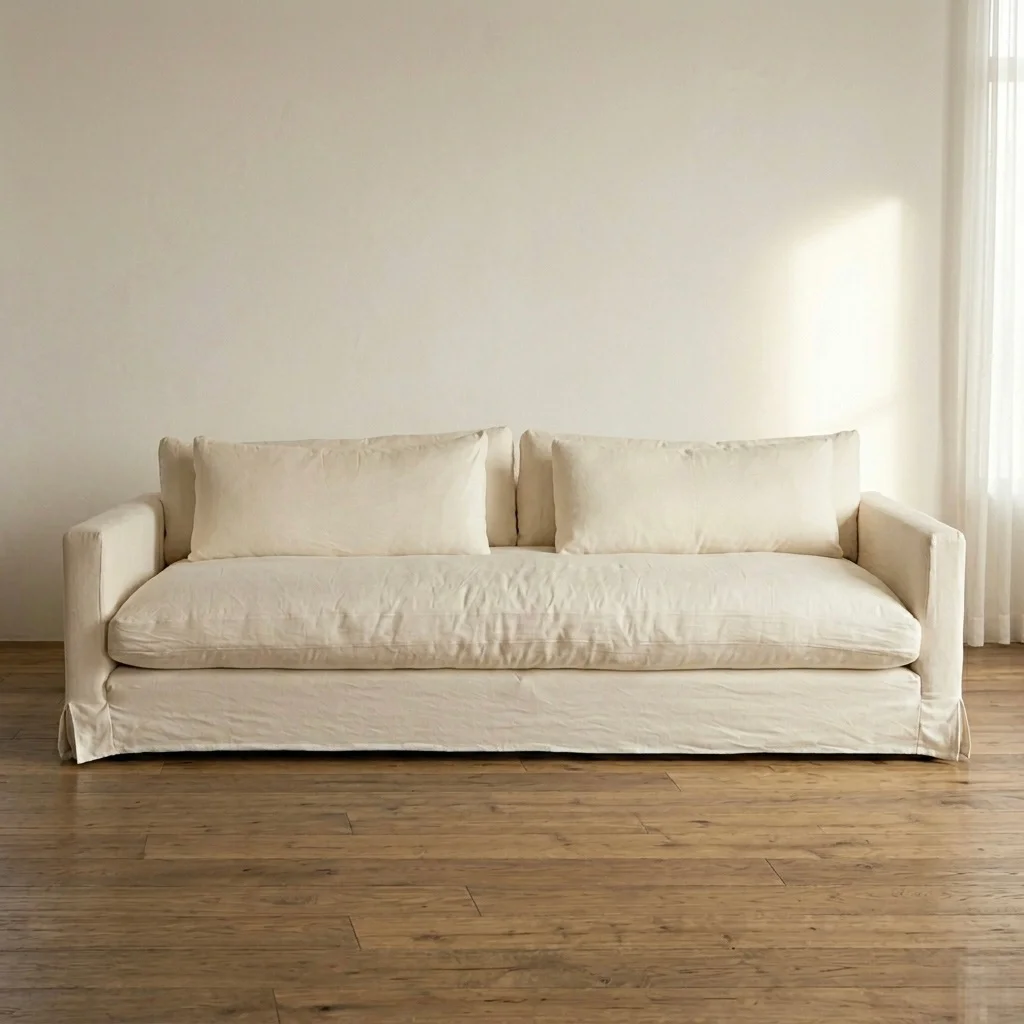
How to clean a fabric sofa: the basics
To clean a fabric sofa, vacuum it weekly with an upholstery brush, blot spills straight away with a clean, dry cloth (never rub) and lift any solids with a spoon. For marks that remain, use only the method your care label allows, after testing it in a hidden spot. For a periodic deeper refresh, Sofa Studio recommends a hand steam cleaner with a mild detergent on the seat and back cushion covers.
That covers most homes. The sections below explain each step and the exceptions, because some fabrics, especially hand-dyed linens, need a lighter touch.
Before you start: check the label and gather a kit
Every fabric reacts differently to water, detergent and heat, so read the care label or the care instructions that came with your sofa before you clean anything. If you can't find them, contact the maker with your fabric name and ask.
Many upholstery fabrics sold in North America carry a cleaning code. If yours has one, this is what the common codes generally mean:
| Code | What it generally means |
|---|---|
| W | Water-based cleaning is fine, such as a mild detergent solution or steam. |
| S | Solvent-based cleaning only, with no water. Usually best left to a professional. |
| W/S | Either water-based or solvent-based cleaning may be used. |
| X | Vacuum or brush only. No water and no solvents. |
Not every sofa uses these codes, and the maker's own care instructions always come first. Then put together a small kit:
- A vacuum with an upholstery brush and a crevice tool
- Several clean white cloths, which won't transfer dye
- A spoon or a dull butter knife for lifting solids
- A mild, clear, dye-free detergent
- A soft-bristled brush for velvet and textured weaves
- A hand steam cleaner, if your fabric's care instructions allow steam
A 10-minute weekly routine
- Take off the loose cushions and set them aside.
- Vacuum the deck and crevices with the crevice tool. Crumbs, grit and pet hair collect here, and grit wears fibres down like fine sandpaper.
- Vacuum every surface with the upholstery brush on low suction, working top to bottom: back, arms, then seat.
- Brush textured fabrics. Run a soft brush over velvet in the direction of the pile, and very lightly over bouclé to lift the loops.
- Fluff and rotate the cushions. Plump loose-fill cushions and swap their positions so they wear evenly.
- Look for new marks. A spot caught early is far easier to remove than one that has sat for weeks.
Don't forget the floor underneath. Sofas that sit up on exposed legs, such as the Amiri Expose Leg Both Side Chaise, make it easy to run the vacuum under the frame.
How to clean a spill on a fabric sofa
Speed matters most. Sofa Studio doesn't add chemical stain-repellent coatings to its fabrics, so a spill left to sit has more chance of soaking in.
- Lift solids first. Scoop food or anything thick with a spoon, working from the outside in.
- Blot, don't rub. Press a clean, dry white cloth onto the spill to draw the liquid up. Rubbing pushes it deeper into the fibres and spreads it.
- Keep blotting with fresh sections of the cloth until nothing more transfers.
- Check the care label before using anything wet. If the fabric is a hand-dyed linen, or the label says solvent-only or vacuum-only, stop here and get advice.
- Test in a hidden spot, such as the back of the sofa or the underside of a cushion. Let it dry fully, then check for colour change, rings or a change in texture.
- Apply sparingly. Dampen a cloth with lukewarm water and a little mild detergent, then dab the mark. Never pour liquid onto the sofa.
- Rinse by blotting with a second cloth dampened with clean water, to lift any detergent residue.
- Blot dry, then air-dry with good airflow. Skip the hair dryer and heater.
For protein-based spills such as milk or blood, use cool water only, because warmth can set them. If a mark won't budge after one careful attempt, call a professional upholstery cleaner rather than repeating the process and spreading it.
Cleaning notes by fabric type
Velvet
Blot gently and never scrub, which crushes the pile. Once the area is completely dry, brush the pile back into place in one direction.
Bouclé
Blot with a light touch so you don't distort the loops, and avoid stiff brushes. If a loop snags, don't pull it. Ease it back into the fabric or trim it carefully level with the surface.
Thread-dyed cotton linen
Sofa Studio's Thread-Dyed Cotton Linen carries its colour right through every yarn, so it holds up to careful spot-cleaning better than hand-dyed linen does. Stay within its care instructions and it is one of the easier fabrics to keep looking fresh.
Hand-dyed linens
Sofa Studio's hand-dyed linens (its light and medium weights, plus washed cotton linen) can fade or discolour if spot-cleaned. Blot spills and lift solids as usual, but think twice before putting any liquid on a visible area. Test in a hidden spot, and if you are unsure, ask Sofa Studio's team or a professional cleaner before treating the mark.
Microfibre leather and leather
These follow their own care instructions. Leather care depends on the finish, and a brushed nubuck such as Sofa Studio's Meridian Leather needs different care from a smooth, finished leather, so follow the instructions for your specific material. Our leather vs fabric sofas guide explains how the materials differ.
Steam cleaning cushion covers
For a deeper clean every so often, Sofa Studio recommends a hand steam cleaner with a mild detergent on the seat and back cushion covers. Steam lifts everyday grime and freshens the fabric without soaking the cushion.
- Vacuum first so you aren't steaming loose dirt into the fibres.
- Test on a hidden area and let it dry completely before judging the result.
- Hold the nozzle a few inches away and work in light, even passes rather than hovering in one spot.
- Use a mild detergent only, and only as your steam cleaner's instructions allow. More isn't better, because residue attracts dirt.
- Avoid soaking. The foam core inside a seat cushion shouldn't get wet, so light passes are enough.
- Dry thoroughly in a ventilated room, out of direct sun, before anyone sits down or the throws go back on.
A handheld steamer is also handy for relaxing wrinkles in a slipcover between washes.
Washing a slipcover
If you have a slipcover sofa such as the Aria Slipcover Sofa, the cover comes off for cleaning. Check its care label first, then:
- Wash in cold water, and expect some subtle fading on the first wash, especially with dark, saturated colours or natural linen and cotton.
- Wash all the pieces of the cover together so any change in colour stays even.
- Follow the label for drying; when in doubt, air-dry out of direct sun.
- Smooth any wrinkles with a handheld steamer once the cover is back on.
Sofa Studio pre-washes its fabrics to remove surplus dye, but a little colour in the water on the first home wash is still normal, much like a new pair of dark jeans.
Mistakes that cause lasting damage
- Rubbing or scrubbing. It spreads stains, crushes pile and fuzzes the weave.
- Too much water. Over-wetting leaves rings and can soak the cushion core, which is slow to dry.
- Harsh chemicals. Bleach, strong solvents and heavy-duty stain removers can strip colour from untreated natural fabrics. Never mix cleaning products.
- Skipping the patch test. Even a cleaner you have used before can react differently with a new fabric or colour.
- Coloured cloths or printed paper towels. Dye can transfer onto a pale fabric.
- Heat to speed up drying. Hair dryers, heaters and direct sun can set stains, shrink fabric and fade colour.
- Machine-washing cushion covers on a whim. A zip doesn't mean a cover is machine-washable, and washing can shrink a cover so it no longer fits. Follow the label.
- Parking the sofa in a sunbeam or beside a radiator. Not cleaning exactly, but it does more lasting harm than most spills. Dark, saturated colours fade fastest.
Next step: ask before you treat a tricky stain
If you are not sure how your fabric will react, ask before you experiment. Sofa Studio's team answers live chat and phone calls (905-799-8877) between 11am and 7pm Eastern, and email at info@sofastudio.ca. Have your fabric name handy. The FAQ page also covers fabric care, and you can send a message through the contact page.
Still choosing a sofa? Cleaning is worth thinking about now. Our guides to pet-friendly sofa fabrics and velvet vs bouclé vs linen explain which fabrics are most forgiving day to day.
Frequently asked questions
How often should I clean a fabric sofa?
Vacuum it weekly, deal with spills the moment they happen, and plan a deeper clean of the cushion covers when they start to look dull, often once or twice a year in a typical home. Homes with pets or young children may need it more often.
Can I use a store-bought upholstery cleaner?
Only if your care label allows that type of cleaner, and only after testing it in a hidden spot. Natural, untreated fabrics can be sensitive to harsh chemicals, so a mild detergent is the safer place to start. Be wary of any product that promises to remove everything.
How do I get rid of smells on a fabric sofa?
Start by vacuuming thoroughly, including under the cushions, and airing the room. Wash any throws and pet blankets, and steam clean the cushion covers with a mild detergent if the care instructions allow it. Odours from accidents that have soaked into a cushion are best handled by a professional upholstery cleaner.
Can I put sofa cushion covers in the washing machine?
Only if the care label specifically says so. A zip on a cushion cover is usually there for fitting the cover over the cushion, not for laundering, and machine-washing can shrink a cover so it no longer fits. For fixed cushion covers, a hand steam cleaner with a mild detergent is the safer option.
Why did a ring appear after I cleaned a spot?
Rings usually form when too much water is used or the area dries unevenly, leaving a tide line of residue at the edge. Use less liquid, blot from the outside in and let the area dry with good airflow. If a ring appears on a delicate fabric, get professional advice rather than wetting it again.